Enhancing the TELUS Digital Ordering flows to launch eSIM activations — making a technically complex activation feel clear, confident, and in the customer’s control.
The opportunity
Make a hidden technical process feel simple.
With eSIM, the physical SIM disappears; the decisions and setup do not. Customers still need to understand whether their device is ready, choose a plan, complete an order, and activate service. My design focus was the continuity between those moments: what the customer knows, what they need to do, and what happens next.
Customer outcome
Understand the choice, complete setup, and know when service was ready.
Business outcome
Support eSIM adoption through TELUS digital ordering.
Design focus
Make technical complexity understandable at the moments it mattered.
Reported results
Signals of reach, conversion, and service impact
12,513
Devices + plans bought with eSIM
47.6%
QoQ eSIM penetration
37.8%
Checkout conversion increase
20%
Faster activation
15%
Fewer support calls
The problem
The purchase was only one part of the experience.
An eSIM order crossed several kinds of complexity: a device had to be compatible, a plan had to be selected, an order had to be completed, and activation had to work on the customer’s device. Those steps spanned different parts of the experience. The design challenge was to make the handoffs feel like one coherent journey.
I focused on giving customers a clear next step at every point while supporting TELUS’s goal of growing digital eSIM adoption.
I approached this as an end-to-end service problem. The work connected what TELUS promised during ordering with the guidance customers received during activation, so the experience could lead to one outcome: getting connected.
Objective and constraints
I set a direction that worked for customers and the service behind them.
What customers needed
·Know whether their device could use eSIM.
·Understand the plan and purchase decisions.
·Know what to do next and when activation was complete.
What the business needed
·Support eSIM adoption in TELUS digital ordering.
·Improve completion through checkout and activation.
·Reduce avoidable post-purchase support demand.
Constraints I designed around
The experience had to account for differences in device compatibility and setup, as well as the handoff between digital commerce and device settings. Those dependencies shaped what could be promised, when guidance appeared, and how completion was communicated.
Discovery
I looked across the journey before narrowing in on screens.
I used competitive analysis, stakeholder interviews, data analysis, and journey mapping to understand the experience from more than one angle. This gave me a way to consider customer expectations alongside the business and technical context the design needed to work within.
I brought those perspectives together around the end-to-end service, rather than treating discovery as a set of disconnected activities.
Questions that shaped discovery
·Where did customers encounter compatibility questions?
·Which checkout decisions created uncertainty?
·How did setup differ across device types?
·Where did support contacts cluster in the journey?
How I framed the work
·Aligned partners around a shared end-to-end outcome.
·Mapped dependencies and ownership across teams.
·Separated available evidence from assumptions to investigate.
·Prioritised friction by customer impact and delivery feasibility.
Competitive analysis across carrier plan and ordering experiences.
Click to enlarge
Experience principles
I used the design to make the complicated parts feel manageable.
I kept clarity and continuity at the centre of the design decisions. These principles captured how I approached the work.
01 · Resolve uncertainty early
I helped customers understand eligibility and prerequisites before they committed.
02 · Keep decisions in context
I kept plan and device information close to the decision it supported.
03 · Make the next action obvious
I connected order confirmation with relevant setup guidance.
04 · Design for recovery
I considered how the experience could guide customers when activation did not go as expected.
Prioritisation matrix, design principles, trade-off record, and annotated concept.
Click to enlarge
Journey map
I gave the journey a clear beginning, middle, and finish.
I mapped the experience across five moments: understanding eSIM, checking readiness, choosing a plan, following setup guidance, and confirming connection. That view helped keep the design anchored in the full service and the transitions customers had to make.
Explore
Understand eSIM and its fit
Check
Confirm compatibility and prerequisites
Choose
Select plan and complete purchase
Set up
Follow device-relevant activation steps
Connect
Confirm success and explain what’s next
Service architecture across purchase, configuration, checkout, and provisioning.
Click to enlarge
From structure to interface
I designed the interface to carry customers forward.
I led the translation of the customer journey into wireframes and interface designs, using two rounds of moderated testing with 12 participants to guide refinements to content, flow, and interactions.
Wireframes for the BYOD page, device selection, and compatibility check.
Click to enlarge
Testing revealed that customers responded better to compatibility checks that felt helpful rather than required. Inline reassurance reduced hesitation, and modal checks kept customers moving better than page redirects. I used these findings to clarify eligibility, purchase details, checkout, setup, progress, and support—helping customers understand what to do next without slowing them down.
Compatibility-check variants carried into moderated testing.
Click to enlarge
Final output
I carried the work through design execution.
I led the translation of the strategy into a production-ready experience, using the TELUS design system to support consistency and scalable implementation. I made eSIM choices easier to understand and placed device compatibility checks in a modal, so customers could confirm their device without leaving the purchase flow.
These decisions helped build confidence and keep the journey clear from eSIM selection through purchase and activation.
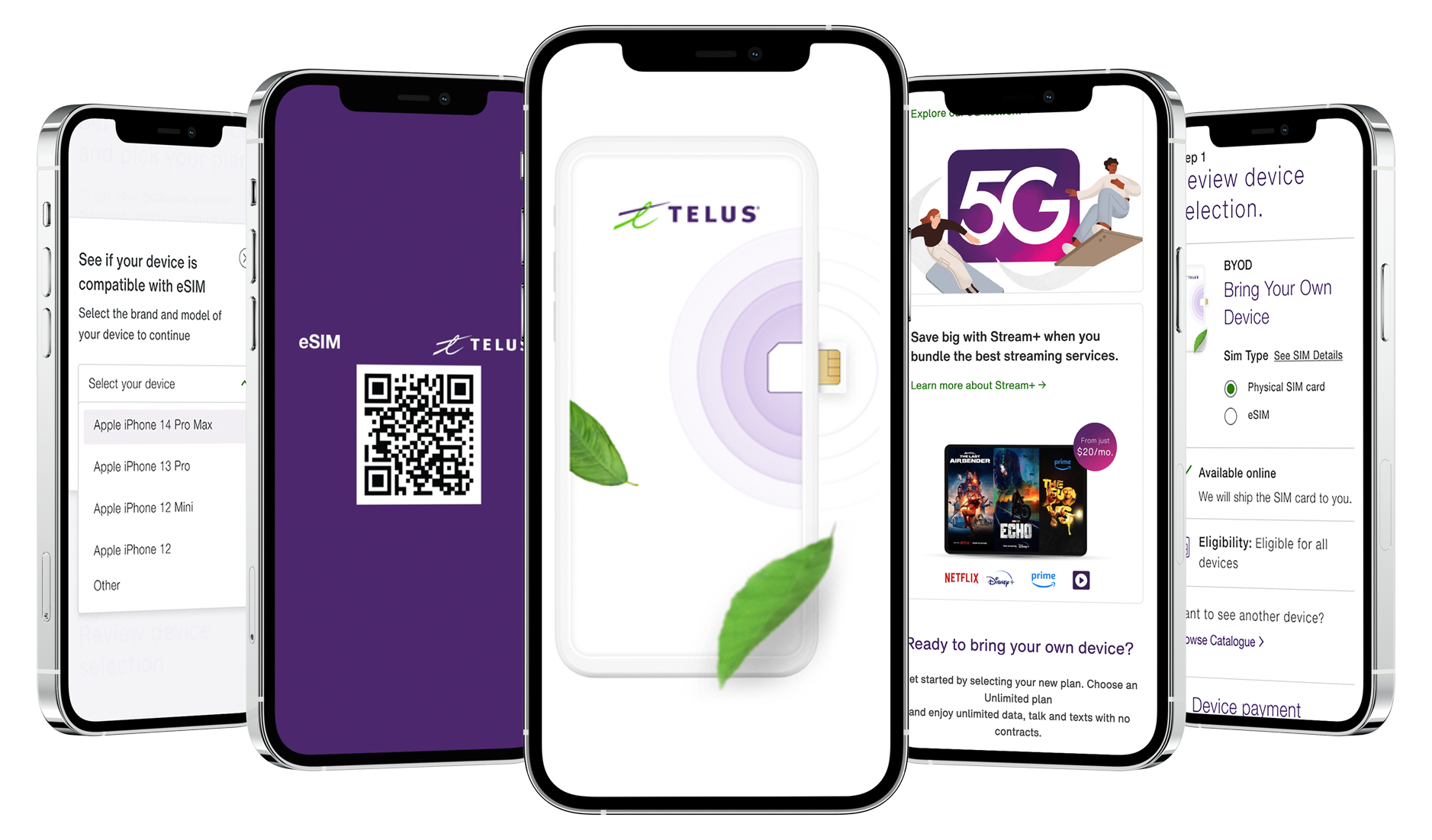
Final screens across device selection, SIM options, compatibility, and cart.
Click to enlarge
Impact
The results were tracked across the journey, not at a single screen.
The reported figures related to eSIM purchases, penetration, checkout, activation, and support. Together, they covered signals from the decision to adopt eSIM through the experience after purchase.
I used these results to frame impact across the journey. Each figure still needed its definition, time period, baseline, and source so the contribution of the design work could be described accurately alongside other factors.
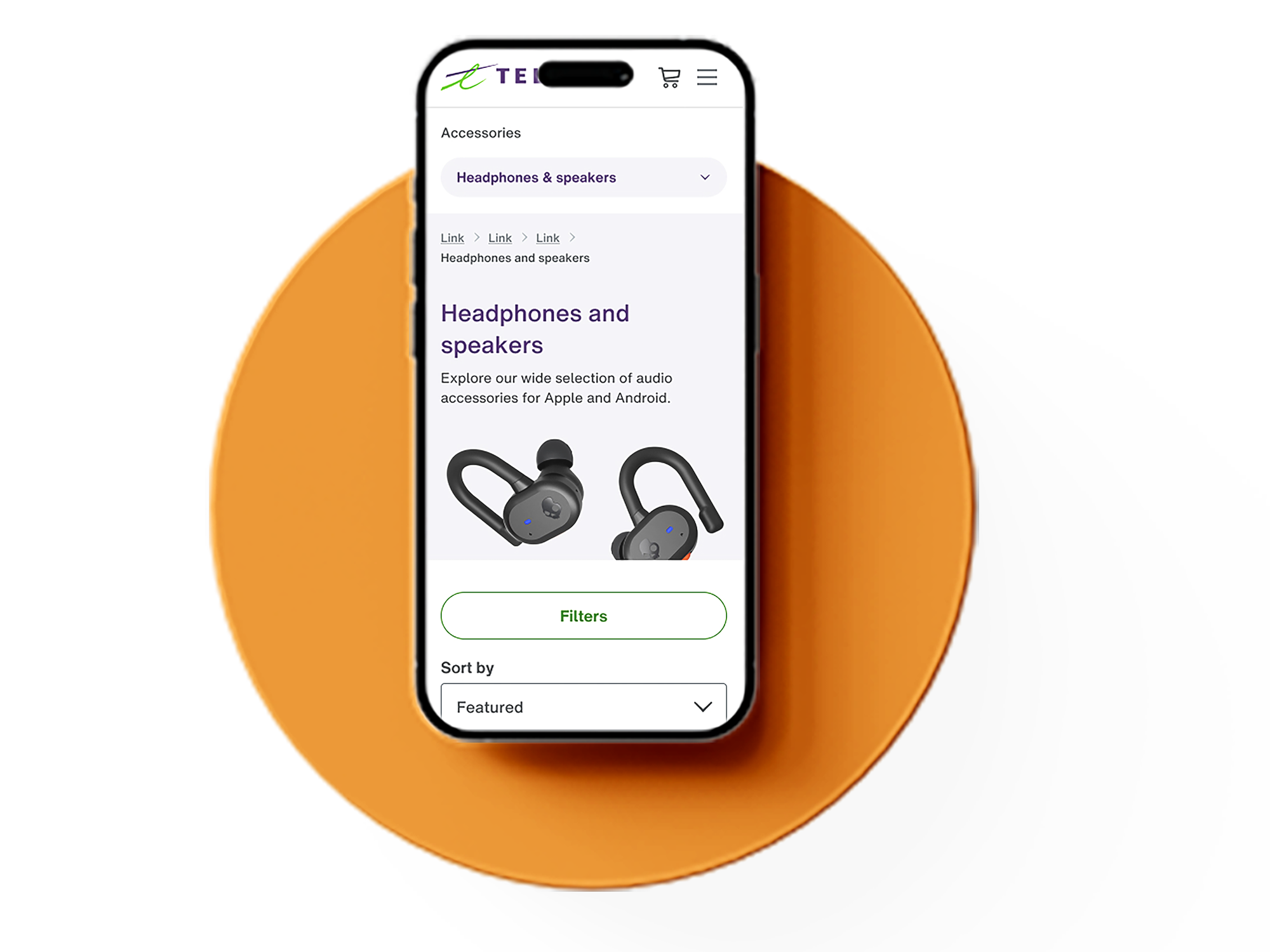
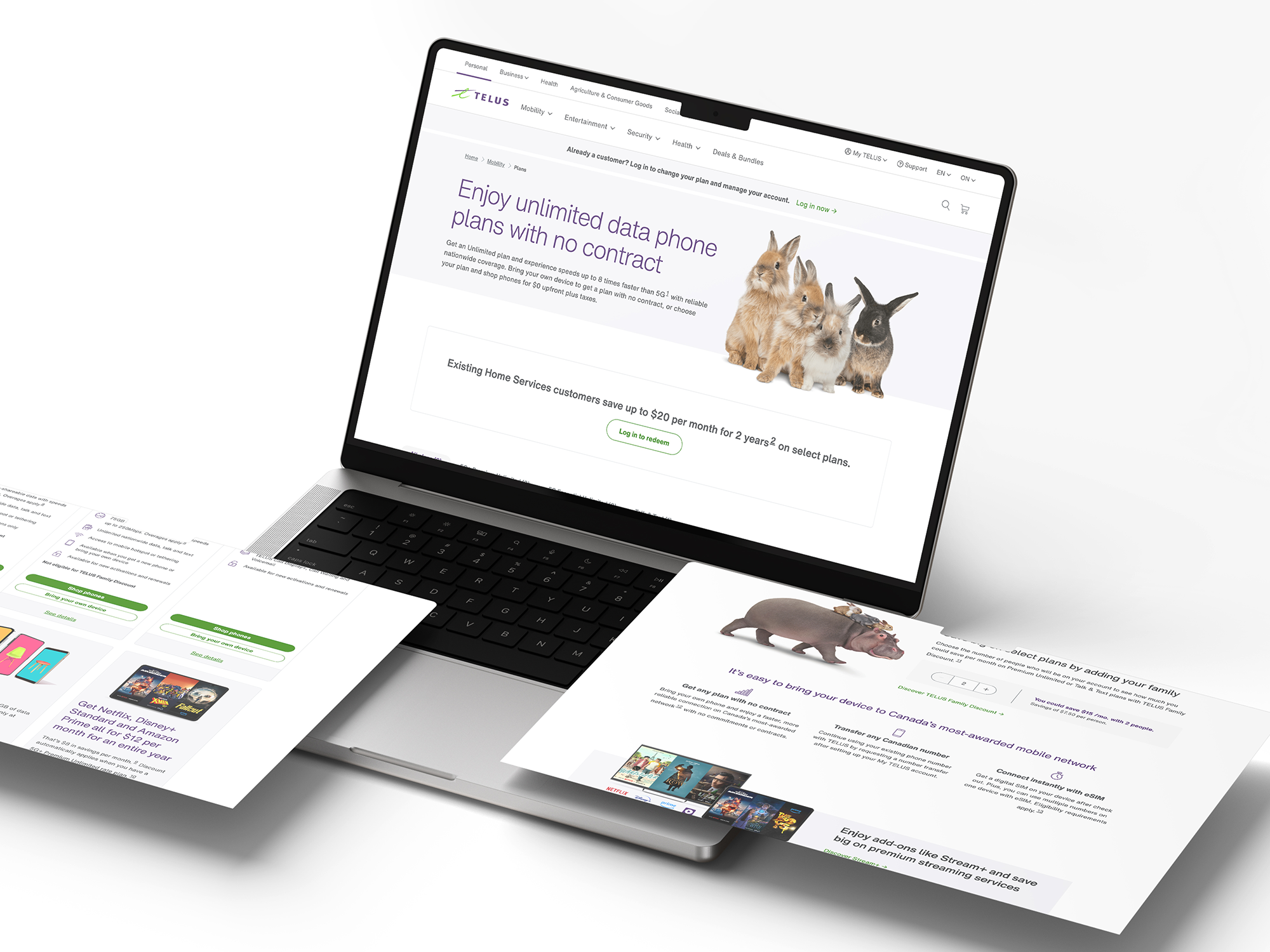
The shipped experience across devices.
Click to enlarge
What I learned
The experience had to feel coherent from the customer’s point of view.
I kept the team focused on the full journey, including the decisions, handoffs, device behaviour, and service expectations that connect one screen to the next. That shared view helped guide design and delivery around the customer outcome.
The experience is live. Early project results included 47.6% cart conversion and a 37.8% checkout conversion rate. Activation time and support call reductions are long-term measures to validate, not confirmed outcomes.
What I learned
·Trust is shaped by how clearly the experience explains what happens next.
·Reassurance is most useful when it appears before customers need to make a decision.
·Reducing uncertainty can benefit both customers and the teams who support them.
Where I’d take it next
·Review funnel and support data to find where customers still hesitate or need help.
·Partner with delivery teams to prioritise improvements by customer impact.
·Track adoption, activation time, and support contacts to understand the experience’s ongoing effect.
My role
I led the UX strategy and design execution.
I led end-to-end UX strategy and execution for the eSIM activation initiative. My work covered understanding the opportunity, shaping the journey, and carrying the experience into wireframes and design execution. The project brought eSIM into TELUS digital ordering and connected that purchase with activation.
I worked across the experience to keep the customer journey in view as the design took shape.
Project details
Timeline
February–October 2023; launched November 8, 2023.
Role
UX strategy and execution
Collaborators
Product, Engineering, Design, and Content teams.
Platform
TELUS Digital Ordering web, NGC, and Apple Lookup Server.
Scope
eSIM device ordering and BYOD for supported Apple iPhones.